A good wedding running order is more than a list of times. It is the schedule that brings calm, sets clear expectations and leaves enough room for photography without your day feeling forced. With documentary wedding photography in particular, smart planning helps give real moments the space they need.
Why a good running order brings calm on your wedding day
A clear plan means you have to switch gears less on the day itself. You know where to be, suppliers know what is coming and there is more room for spontaneous moments. That is good not only for you, but for the reportage as well.
With my way of working that helps even more, because I direct nothing and stay in the background. If there is calm in the schedule, you have to rush less between the elements of the day. That is exactly where the images come from: a hug with your parents, a glance while getting ready, a quiet moment just before the ceremony.
To me, photos should feel like a musical memory: warm, intense and timeless. That atmosphere rarely comes about in a schedule that is nailed shut, but precisely in the small openings in between.
If you want to see examples of that, you can see more real moments in the portfolio.
Start with the anchors of the day
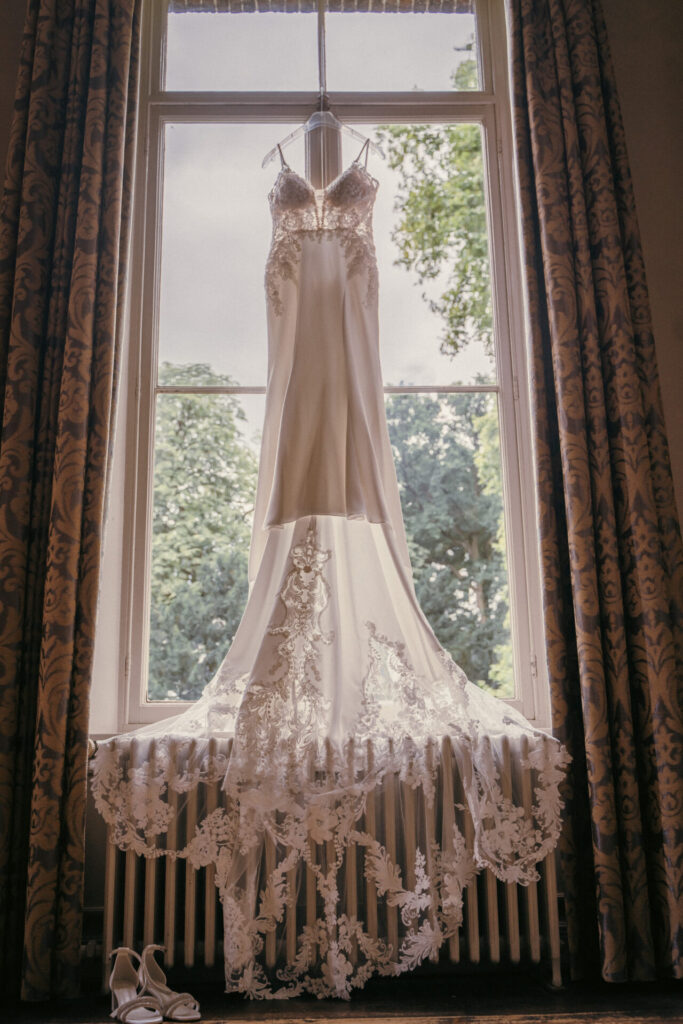
A practical wedding schedule starts with the fixed parts. Think of the preparations, the ceremony, the congratulations, the drinks, the dinner and the party. Those anchors form the basis of your wedding day timeline. Only after that do you look at details such as journeys, photo moments and moments of rest.
Because logistics have a big influence on your schedule, it is wise to factor in venues and distances early on. I work from Eindhoven and travel throughout the Netherlands and beyond by arrangement, so I can think along about that early in the process. If your day takes place in Eindhoven, Tilburg or elsewhere in North Brabant, travel time is often just as decisive as the programme itself.
Which moments always belong in your wedding day schedule
At the very least, put these parts in your wedding running order:
- the preparations and getting ready
- leaving and arriving at each venue
- the ceremony
- the congratulations
- the drinks reception
- group photos
- possibly a first look or a short moment together for photos
- dinner and speeches
- evening moments such as the cake, the first dance or the party
Note down who is needed where as well. Think of witnesses, the master of ceremonies, parents or suppliers. That saves hunting for people on the day itself.
Here too, I set nothing up. That is exactly why it is important to include preparations, reactions and transitions in the schedule. They often say just as much as the official highlights.
Do not forget travel time, set-up time and slack
A lot of wedding day planning does not come unstuck on the ceremony itself, but on everything around it. A drive from one venue to another, parking, gathering everyone or a slight overrun can quickly create pressure.
So plan not only the main moments, but also:
- travel time between venues
- time to get set up at a new place
- room for overrunning
- a plan B for rain or delays
If “a second photographer or a drone is possible by arrangement”, that calls for extra coordination too. A drone only comes along when it adds something and when the venue allows it. So that is better discussed beforehand than on the day itself.
How much time to plan for the photographer in your wedding running order
There is no fixed schedule that works for every wedding. How much time you need depends on what you want, the number of venues and which parts of the day you want to see back in the reportage. More important than an exact number of minutes is whether there is enough air around the moments that carry meaning.
I work most comfortably with a schedule that does not nail everything down. That way you leave room for what actually happens, instead of only for what is on paper.
I am not after forced poses or artificial smiles, but pure joy, genuine tears and small gestures that say so much. That takes time, not an extra item on the programme.
Put subtly: a reportage starts at €1,725 for six hours. So it is worth working out in advance which part of your story you want captured.
The preparations and getting ready
The morning often sets the tone for the rest of the day. Not because big things happen, but because this is exactly where the small gestures become visible. Someone helps with a dress, a tie is straightened one more time, there is laughter about the nerves.
For this part of the day, calm works better than haste. If you plan everything too tightly, the room for real images disappears. That would be a shame, because this is usually the quietest hour of the day and often the loveliest for that reason.
First look, photo session and spontaneous moments
Planning a first look can be lovely if you want a quiet moment together before the ceremony. For other couples it suits them better to see each other only during the ceremony. Both choices can work, as long as you fit them logically into your wedding schedule.
The same goes for a short photo session. Do not see it as a separate compulsory block, but as part of the day. A walk around the venue, a moment away from the crowd or a few minutes towards the end of the afternoon can be enough.
My style is unobtrusive and relaxed: I blend in among your guests and capture the atmosphere without you noticing. As a result, spontaneous moments do not have to be scheduled separately. They come about between the fixed elements, as long as those do not follow each other to the minute.
Planning group photos without losing your drinks reception
Planning wedding group photos works most comfortably in one short, clear block. The drinks reception often works well for that, as long as you make a list beforehand and appoint someone to gather people.
In practice this usually works best:
- make a short list of the combinations you want beforehand
- put the most important combinations at the top
- let the master of ceremonies call people together
- choose a spot close to the drinks or the ceremony space
If “a second photographer or a drone is possible by arrangement”, that can affect the logistics. Discuss wishes like that beforehand, so your schedule stays manageable.
A smart example structure for a wedding day timeline
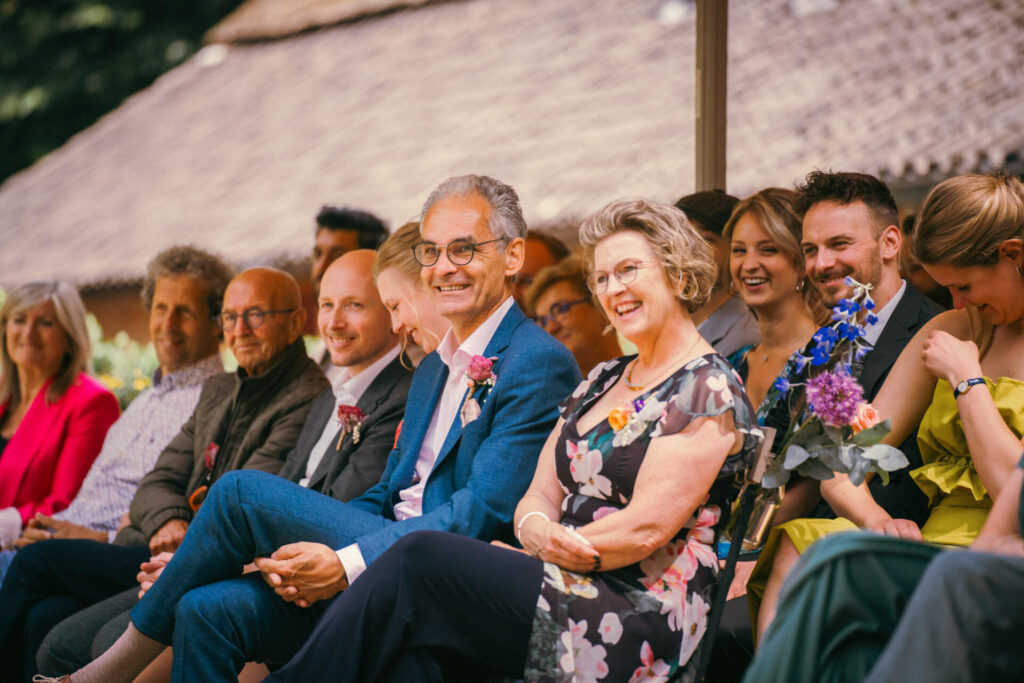
A wedding day timeline does not have to be a fixed template. Better to think in logical parts of the day. That usually works more comfortably than a schedule driven purely by minutes. Certainly if your day involves several venues in Eindhoven, Tilburg or elsewhere in North Brabant, where travel time shapes the flow of the day.
Morning and the run-up to the ceremony
Start calmly and build from there. Allow for getting ready, the details, contact with the people close to you, and leaving. If you later choose an album, a complete morning helps the story line as well. The twelve hour Documentary package includes a hardcover photo book of 21 by 28 centimetres. In it, the beginning, the build-up and the close of the day come together more strongly than when only the ceremony and the party were captured.
Ceremony, congratulations and drinks
This part of the day mainly needs room. Not necessarily in length, but in breathing space. A ceremony sometimes runs differently from expected. Congratulations take as long as they take. And the drinks reception is often when a lot of small encounters happen.
My approach works well then: I stay in the background and capture reactions, embraces and short conversations as they really happened. If I work with a second photographer, they focus on the faces in the room during the ceremony while I stay with you.
Dinner, golden hour and the evening party
The evening does not have to be packed to be rich in images. Dinner, speeches, a short moment outside when the light invites it, and then the shift into the party often give a natural build-up on their own.
If “a second photographer or a drone is possible by arrangement”, you discuss that beforehand. For a drone it always depends on the venue and the conditions allowing it.
Coordinating with the master of ceremonies, the venue and the photographer
A running order only really works when the people around it know what is in it. That goes for your master of ceremonies, the venue and the photographer. Certainly when you are working with several places or a tight schedule, coordinating beforehand is essential.
I work from Eindhoven and travel throughout the Netherlands and beyond by arrangement. If you are looking for a wedding photographer in North Brabant, dan is die afstemming meestal snel geregeld.
Every wedding is different, and that is exactly what makes this work so special. I take the time to really get to know you, so that the photos suit you. That is why I go through the schedule with you roughly a week beforehand: locations, timings and who has which role.
Who keeps an eye on the running order on the day itself
Appoint one point of contact. Usually that is the master of ceremonies. That way you do not have to keep switching between guests, the venue and suppliers yourselves.
That fits my role better as well. I think along about timing and running order, but I am not the person leading the day. With the master of ceremonies I do exchange numbers, so that we can reach each other quickly on the day.
What information suppliers need in advance
Share at least the following beforehand:
- addresses and the order of the venues
- contact details for the master of ceremonies and the venue
- expected arrival and start times
- parts that need extra attention
- the rain option or other back-up scenarios
If “a second photographer or a drone is possible by arrangement”, put that in the final version of the running order too.
Common mistakes in planning the wedding day around the photographer
In my experience a few things most often cause unrest in a wedding running order:
- too little buffer between the parts
- too many venues in one day
- no clear place for group photos
- underestimating travel time
- no plan B for bad weather
- filling every gap, so spontaneous moments disappear
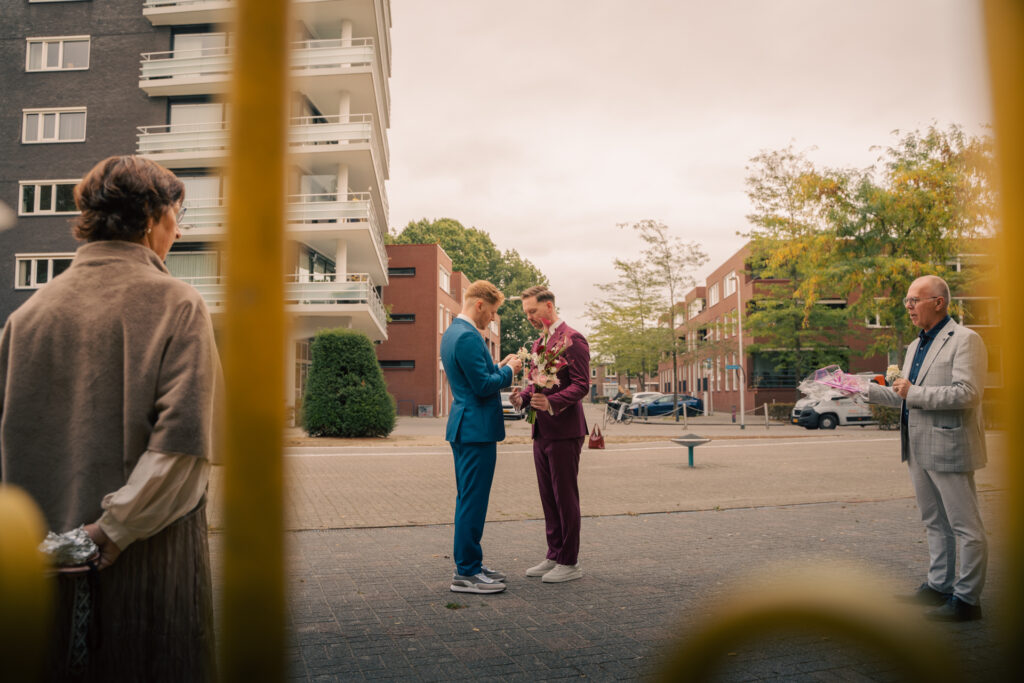
With a documentary reportage you notice that immediately. If the schedule is too tight, there is less room for the interactions in between, and those are exactly the photos you look back at most often later.
A wedding running order checklist for your final check
Use this short checklist for your final check:
- are all the anchors of the day in the right order?
- is travel time between venues included?
- is there slack for overrunning or bad weather?
- does the master of ceremonies know what their role is?
- does every supplier have the right contact details?
- is the block for group photos clearly in the schedule?
- have you thought about a first look or a quiet moment together?
- does the structure fit the story you want to see back later?
For anyone choosing a twelve hour reportage: the twelve hour Documentary package includes a hardcover photo book of 21 by 28 centimetres. In it you each separately choose your own top five favourite photos without discussing it, and those always make it in.
Does your planning suit a documentary wedding reportage?
If your wedding day is to have room for real moments, a schedule that does not close everything off helps. I work documentary style, with attention for atmosphere, timing and whatever happens along the way. Your day is about your love and your story, and I am there to catch those moments as they really are, so that you relive them again and again.
Are you looking for a wedding photographer in Eindhoven or a wedding photographer in Tilburg, or do you simply want to know whether your running order is soundly put together? Then you can get in touch to talk through your planning.
FAQ’s
What is a wedding running order?
A wedding running order is an overview of the schedule, the people involved and the important moments. It helps you and your suppliers keep the day running smoothly.
How much time should you plan for the photographer on your wedding day?
That depends on what you want, the venues and how many parts you want captured. In any case, plan enough calm and slack around the important photo moments.
When is the best time to plan group photos?
A fixed block during the drinks reception often works most comfortably. That keeps things clear and limits interruptions for you and your guests.
Is a first look useful in the running order?
A first look can bring calm and make room for photos earlier in the day. Whether it suits you depends on your schedule and your preferences.
Should the photographer receive the running order in advance?
Yes, that is sensible. It lets the photographer think along about what is feasible, the order of things and moments that need extra attention.
How do you avoid stress in your wedding day timeline?
Work with buffers, limit unnecessary journeys and appoint someone who
keeps an eye on the running order. That leaves room for spontaneous moments.