An unplugged wedding is a wedding, or part of a wedding, where you ask your guests not to use a phone, camera or tablet. Usually it applies to the ceremony, but you can also choose a broader phone free wedding. The aim is simple: more attention for the moment, less distraction and calmer images.
Couples who choose a phone free ceremony often want the entrance, the vows and the reactions to be genuinely experienced, without screens in between. That fits a reportage in which moments are captured as they happen, certainly if you are looking for a wedding photographer in North Brabant who approaches the atmosphere calmly.
What does an unplugged wedding mean exactly?
At an unplugged wedding you ask guests to put away their phone, tablet or camera. That can apply to the whole day, but more often to one moment, such as the ceremony. You are then deliberately choosing presence over recording.
In practice it means nobody steps forward with a smartphone during the entrance and no screens go up during the kiss or the vows. That keeps the view clear and makes the moment feel calmer.
That fits my way of working well. I direct nothing and stay in the background, and to me photos should feel like a musical memory: warm, intense and timeless.
Why do couples choose an unplugged ceremony?
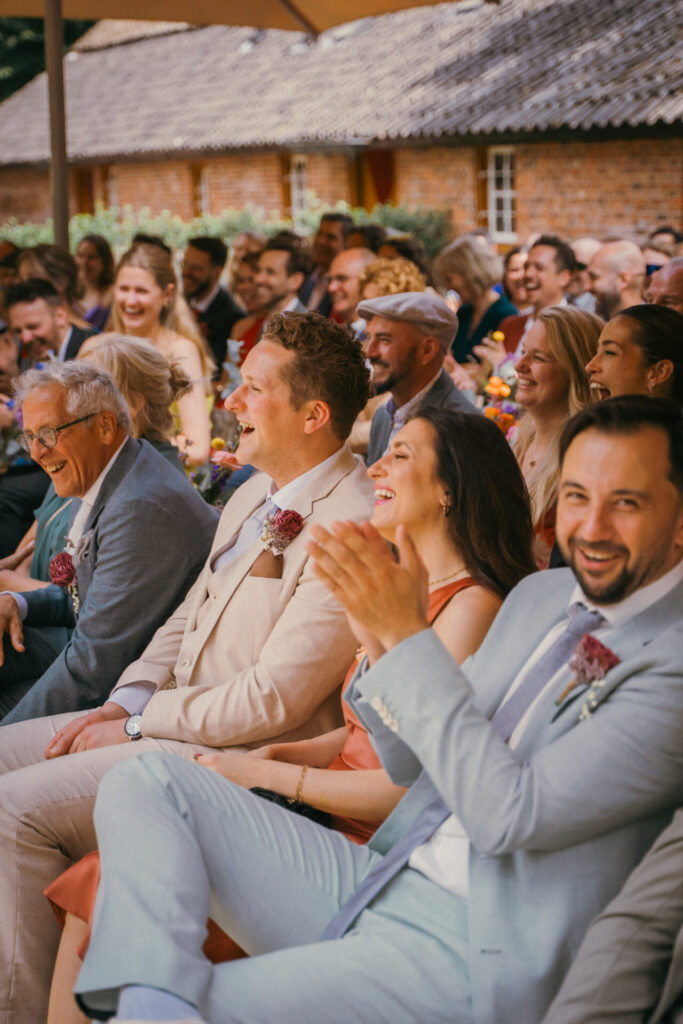
An unplugged ceremony is often chosen to keep the attention on the moment itself. Think of walking in, looking at each other, a parent visibly moved or friends laughing out loud. With fewer screens in the way, those small gestures stay easier to see.
It helps for photo and video as well. An outstretched arm holding a phone in the aisle can end up in front of a face. A screen above shoulder height can break up the view of an embrace.
Your day is about your love and your story, and I am there to catch those moments as they really are, so that you relive them again and again. An unplugged ceremony helps with that, because I then see what is genuinely happening instead of screens in between.
More of the day for you and your guests
Without phones there is a better chance that people really watch what is happening. You notice that exactly on the moments you want to remember later: a smile just before the vows, a hand being held for a second, a glance towards family.
I am not after forced poses or artificial smiles, but pure joy, genuine tears and small gestures that say so much. That is exactly where an unplugged ceremony helps: guests really watch, and you see that back in their faces.
If you are getting married in Brabant, I think along practically. I work from Eindhoven and travel throughout the Netherlands and beyond by arrangement.
Calmer and more timeless wedding photos
Wedding photos look calmer when no phones, tablets or cameras appear in the frame. A ceremony without screens feels less cluttered in the images, both in wide shots and in close-ups of reactions.
My style is unobtrusive and relaxed: I blend in among your guests and capture the atmosphere without you noticing. A clear line of sight helps enormously with that. In the photos you then see faces, hands and glances instead of devices.
If you would like to see what that looks like, have a look at the portfolio of wedding reportages. And if you would like something tangible in your hands later: the Documentary package of twelve hours includes a hardcover photo book of 21 by 28 centimetres.
Are there any drawbacks or doubts?
Yes. Not everyone knows the term unplugged wedding. Some guests find it a shame not to be able to take their own photo. And there are couples who actually enjoy spontaneous guest photos later on.
So it does not have to be an all or nothing choice. You can limit it to the ceremony, or agree on a clear moment when photos are welcome. Choices are possible in the wider reportage too, because “a second photographer or a drone is possible by arrangement”.
Not everyone knows the term unplugged wedding
The term is not immediately clear to everyone. So use plain language in your invitation or day information. Write, for example, that you would like phones to stay out of sight and put away during the ceremony.
That avoids confusion and sets the expectation clearly without sounding strict.
Some guests would still like to take their own photo
That is understandable. For some people taking a photo feels like joining in or holding on to something. So it helps to stay friendly and offer an alternative, such as one short photo moment straight after the ceremony.
That keeps the ceremony calm, while guests can still capture something for themselves. For me little changes: I stay in the background and stop nothing.
Fully unplugged or only during the ceremony?
You can go either way. A fully unplugged wedding means you keep the whole day phone free. A partial approach usually means no phones during the ceremony and more freedom after that.
For many couples that second option is more practical. You protect the most emotional and formal part of the day without tying down the rest with rules. I work the same way in both forms: watching, moving along and setting nothing up.
The ceremony as the most common phone free moment
The ceremony is often the clearest moment to keep phone free, because so much comes together there: the entrance, the vows, the rings, the kiss and the reactions of the people you love. Those are moments where sightlines and attention count.
If you are getting married in Brabant and would like to talk this through, I am happy to think along. I work from Eindhoven and travel throughout the Netherlands and beyond by arrangement.
A middle ground with a short photo moment
A practical middle ground is a short moment before or after the ceremony when guests are welcome to take a photo. That can take the tension out of the request and makes your wish easier to communicate.
If you would also like extra wide shots of the venue or the setting: “a second photographer or a drone is possible by arrangement”. The drone only comes along when it adds something and when the venue allows it.
How do you tell guests you want a phone free wedding?
The clearer you communicate, the better the chance that guests understand what you mean. Not as a hard rule, but as a friendly wish.
A practical approach is:
1. Mention it in advance on the invitation or on an extra information card.
2. Ask the master of ceremonies to mention it again.
3. Ask the celebrant or ceremony host to make a short announcement just before the start.
4. Put a welcome sign up at the ceremony.
5. Repeat it briefly in the running order if you use one.
Word it kindly and clearly
Avoid vague terms without explanation. Better to write exactly what you would like. For example: put your phone away during the ceremony and enjoy the moment with us. That is clear and friendly at the same time.
Let the message come back at several moments
One sign at the entrance is sometimes not enough. It works better when your message comes back at several moments: in advance, on arrival and just before the ceremony. That gives clarity without feeling strict.
With a schedule in Brabant or the surrounding area it helps to settle this calmly in advance as well. I work from Eindhoven and travel throughout the Netherlands and beyond by arrangement, so we can also simply go through it over a coffee.
Example wording for an unplugged wedding
Below are three short example texts you can use straight away or adapt.
For the invitation
We would like to ask you not to use phones or cameras during our ceremony. That way everyone can truly share this moment with us.
For a welcome sign
Welcome. During the ceremony we ask you to put your phone away and be present in the moment. Thank you.
For the celebrant or ceremony host
Before we begin, a short request on behalf of the couple: would you put your phones and cameras away now? That way they, and you, can experience the ceremony with full attention.
Is an unplugged wedding right for you?
This choice works well if you want to keep your ceremony calm and value real reactions more than individual phone snaps during that moment. At the same time it does not have to be the right form for everyone.
Ask yourselves these questions, for example:
- Do we mainly want calm during the ceremony?
- Does it matter to us that no phones appear in the frame?
- Do we want to give guests room to take photos later on?
- Does a clear wish about this fit the way we want to shape our day?
- Are we looking for a reportage in which moments are allowed to happen by themselves?
Every wedding is different, and that is exactly what makes this work so special. I take the time to really get to know you, so that the photos suit you. If you would like to discuss what suits your day, neem dan contact op. A reportage starts at 1,725 euros for six hours.
Frequently asked questions about an unplugged wedding
What is an unplugged wedding?
An unplugged wedding is a wedding or ceremony where guests are asked not to use their phone, camera or tablet. That way they experience the moment without a screen.
Is an unplugged wedding the same as an unplugged ceremony?
Not quite. An unplugged ceremony usually applies only during the ceremony, while an unplugged wedding can be broader.
Why do couples choose a phone free wedding?
Often for more calm, more attention in the moment and less chance of phones appearing during the important parts.
How do you tell guests you do not want phones during the ceremony?
It works best to communicate this clearly both beforehand and on the day itself, for example through the invitation, a sign and an announcement.
Do guests always stick to an unplugged ceremony?
Not always. Clear and friendly communication helps, but it still depends on the guests.
Can you also choose a partly unplugged wedding?
Yes. Plenty of couples choose to keep only the ceremony phone free and allow more room later in the day.
Are you looking for a wedding photographer in Eindhoven, a wedding photographer in Tilburg or a wedding photographer in North Brabant who is unobtrusively present and captures real moments as they happen, then take your time looking around or get in touch.